


Table of Contents
- Quick Comparison: Durable Streetwear Picks
- How to Tell If Streetwear Is Good Quality
- Best Streetwear Essentials for Daily Wear
- Sustainable Streetwear Brands and Ethical Manufacturing
- Wash-Durability and Care: Making Durable Streetwear Last
- Sizing Consistency and Duties: Shopping Durable Streetwear Online
- Conclusion
- Frequently Asked Questions
Last Updated: September 23, 2026
Quick Comparison: Durable Streetwear Picks
The global streetwear market is projected to hit $397.97 billion in 2026, growing at 7.95% annually through 2034 (Fortune Business Insights streetwear market analysis). That growth has flooded the market with options, and most of them fall apart after a few washes. This guide from Dead Heat cuts through the noise and shows you how to spot the best streetwear sites for durable clothing by focusing on what actually matters: fabric weight, construction, and honest pricing.
Here's the uncomfortable truth most brand-curated lists skip: a $90 hoodie and a $30 hoodie can use identical cotton. The difference is almost always GSM, stitching, and whether the retailer tells you either number. Below, we break down the quality signals to check before you buy, the essentials worth owning, and how to shop online without getting hit by surprise duties.
| What to Check | Good Sign | Red Flag |
|---|---|---|
| Fabric weight | 300+ GSM on fleece | No GSM listed at all |
| Stitching | Double-stitched seams | Single-stitch, loose threads |
| Shrinkage | Pre-shrunk or washed | "May shrink slightly" |
| Fit | Stated measurements | Vague "oversized" only |
| Pricing | Duties shown upfront | Fees revealed at delivery |
How to Tell If Streetwear Is Good Quality
Quality streetwear is defined by three measurable things: fabric weight, seam construction, and shrinkage control. If a product page doesn't give you at least two of those, you're gambling.
The good news is that checking takes about 90 seconds per item once you know what to look for.
Check the GSM and Fabric Weight
GSM stands for grams per square meter, and it's the single most useful number on a product page. A standard cotton tee runs 140-180 GSM. Heavyweight cotton starts around 220 GSM, and serious fleece sits at 300-400 GSM.
Higher GSM means denser textile, better drape, and slower wear. It also holds an oversized fit's shape instead of collapsing after three washes. The 2026 market has shifted hard toward heavyweight, durable fabrics, with brands like Shaka Wear earning attention specifically for rugged, heavyweight construction (ApparelN'Bags guide to durable streetwear brands).
Inspect Stitching, Seams, and Shrinkage Resistance
Look for double-stitched hems and reinforced shoulder seams. Single stitching on a stress point is the first thing to tear. Stitching quality also tells you about the factory: consistent, tight lines mean real quality control, not a rushed cut-and-sew line.
Shrinkage resistance matters just as much. Pre-shrunk or garment-washed fabric holds its fit profile. Unwashed cotton can lose 3-5% of its length in a hot wash, which is how a carefully sized oversized fit turns into a cropped one.
Best Streetwear Essentials for Daily Wear
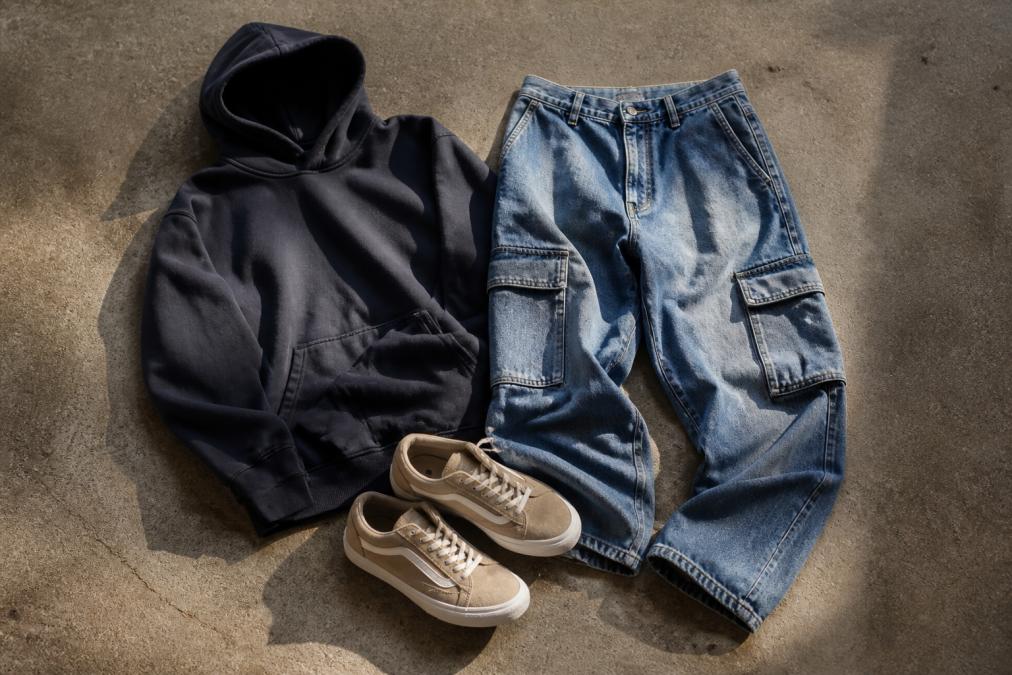
The best streetwear essentials for daily wear are pieces that survive repeated washing and still look intentional: heavyweight tees, a structured hoodie, loose-fit denim, and suede skate shoes. Build around four to six items, not twenty.
This is where the capsule wardrobe idea earns its keep. Fewer, better pieces beat a closet full of fast fashion that pills by month two.
Footwear That Survives a Commute
Skate shoes are the workhorses of streetwear because they're built for abuse. Suede and leather uppers outlast canvas by a wide margin, and vulcanized construction keeps the sole attached through daily wear.
The Vans Womens Atwood Trainers Sneaker Canvas Rainy Day 6 use a double-stitched upper for durability and signature rubber waffle outsole, with a padded tongue and collar for comfort. For something cleaner, the Lakai Griffin Mens Skate Shoes Olive Suede 5 pairs a durable CO-BOUND upper with hidden midsole crating for added comfort and shock absorption. Both are the kind of shoe that looks better scuffed than new.

Denim and Bottoms Built to Last
Denim earns its place through textile density. Heavier denim resists blowouts at the crotch and knees, the two spots that fail first. Look for a stated fabric weight and reinforced stitching at the pockets.
The Spider Denim Pants check the boxes: durable denim with a washed effect, a loose straight fit, and cargo pockets on the side plus front and back pockets. At $69.54, they're also proof that durability doesn't require a luxury price tag.
Lakai Terrace Mens Skate Shoes White →
Sustainable Streetwear Brands and Ethical Manufacturing
Sustainable streetwear brands are those that name their materials and their factories. Organic cotton, hemp blends, and recycled fibers now compete with conventional cotton on durability, not just ethics (Sustainable Jungle on eco-friendly streetwear materials). But the word "sustainable" on a product page is meaningless without a verifiable supply chain and a fabric that actually holds up.
Manufacturing has shifted to match.
This is also where a fast fashion alternative proves itself: fewer, traceable pieces that last longer than a dozen disposable ones. A durable, certified organic cotton hoodie that survives three years of regular wear has a lower environmental cost per wear than a cheap one replaced every six months.
Wash-Durability and Care: Making Durable Streetwear Last
Durable streetwear lasts years, not months, if you wash it correctly. The fabric is only half the equation; care is the other half.
- Wash cold. Heat is the enemy of cotton and screen-printed graphics.
- Turn garments inside out. This protects prints and reduces surface abrasion.
- Skip the dryer when you can. Air drying preserves fit and prevents shrinkage.
- Use less detergent. Residue stiffens fabric and traps odor over time.
- Wash denim less often. Spot-clean between washes to preserve the wash effect.
Sizing Consistency and Duties: Shopping Durable Streetwear Online
Sizing consistency and total landed cost are the two things that ruin online streetwear orders. Get both right and shopping durable streetwear online is straightforward. But most guides stop at "check the size chart." Here's how to actually measure for the oversized streetwear look and avoid the international sizing trap.
How to Measure for the Oversized Streetwear Fit
Streetwear sizing is notoriously inconsistent across brands and countries. A US large is not a UK large, and Asian sizing often runs one to two sizes smaller. Always check the stated measurements in centimetres rather than trusting the letter on the tag. If a site only lists S/M/L with no numbers, that's a red flag for fit profile accuracy.
- Chest width: Measure flat across the chest, one inch below the armhole. For an oversized look, add 2-4 inches (5-10 cm) to your actual chest measurement.
- Body length: From the high point of the shoulder to the bottom hem. Oversized tees and hoodies typically run 27-30 inches (68-76 cm) for a men's medium.
- Shoulder width: Seam to seam across the back. Drop shoulders are common in streetwear; if the shoulder seam sits past your natural shoulder, that's intentional.
Duties, Taxes, and the Real Cost of a Garment
Before you buy, check the return policy for international orders. Some brands charge return shipping that can exceed the cost of the garment. Others offer free returns but only within the same country. If you're ordering from overseas, factor in the possibility that you'll need to resell or gift a piece that doesn't fit. That risk is lower when the brand provides detailed measurements and fabric weight, another reason GSM and stitching specs matter beyond durability.
Conclusion
Finding durable streetwear means ignoring hype and reading the specs: GSM, stitching, shrinkage, and total landed cost. Most sites make that hard on purpose. Dead Heat makes it the default, with a curated streetwear collection, duties and taxes already built into every price, and pieces chosen for how they hold up rather than how fast they sell. Join our email list to get first access to new arrivals and limited drops before they sell out.
Frequently Asked Questions
Where can I find durable clothes that don't sacrifice style?
Look for retailers that publish fabric weight, material composition, and construction details. Heavyweight cotton, hemp blends, and durable denim hold up better than thin fast-fashion alternatives. Dead Heat stocks skate shoes and denim built for daily wear, and duties and taxes are included in the listed price so you know the full cost upfront.
What makes a piece of streetwear durable?
Fabric weight (GSM), stitching quality, and material composition matter most. Heavyweight cotton above 300 GSM resists stretching, double-stitched seams handle repeated wear, and reinforced toecaps on footwear extend lifespan. Shrinkage resistance and colourfast dyes also keep garments looking new after multiple washes, which is why checking the care label before buying matters.
Are there sustainable streetwear brands that focus on durability?
Yes. Manufacturers are increasingly using hemp, organic cotton, and recycled fibers to balance durability with sustainability. Look for supply chain transparency and material sourcing details on product pages before buying.
How do I identify high-quality streetwear fabrics when shopping online?
Check the GSM weight, fibre content, and construction notes. Heavyweight cotton feels denser and holds its shape; hemp blends resist pilling; recycled fibers vary in quality so read the percentage breakdown. Product listings that name the fabric and weight give you more to judge than vague descriptions like 'premium feel'. If a listing does not mention fabric weight, ask customer service before ordering.
What should I check before buying streetwear from an online store?
Confirm the return policy, check whether duties and taxes are included in the price, and look for sizing charts with measurements rather than generic S/M/L labels. Sizing varies across international markets, so comparing your measurements to the chart reduces the chance of a bad fit. Stores that show full landed cost and clear return terms save you money and hassle.