


Table of Contents
- Everyday Carry Essentials for Men: Building a Durable Rotation
- How to Choose High-Quality Men's Accessories That Last
- Best Durable Materials for Men's Accessories
- Durability Testing: How Durable Daily Accessories for Men Hold Up
- Repairability and Longevity: Making Durable Daily Accessories for Men Last
- Age-Appropriate Styling and Sustainability in Men's Accessories
- Frequently Asked Questions
Last Updated: September 25, 2026
Everyday Carry Essentials for Men: Building a Durable Rotation
The U.S. fashion accessories market is projected to exceed $100 billion by 2026, driven by an "investment piece" mentality that favors durability over fast turnover, according to SourceReady's U.S. fashion accessories market report. That shift matters because durable daily accessories for men only work when they're built around a rotation, not a single hero item. This guide from Dead Heat breaks down what actually lasts, what to test before you commit, and how to keep your gear in service for years.
A durable everyday carry rotation is a small set of functional items, typically five to eight pieces, worn daily and replaced on a multi-year cycle rather than a seasonal one.
Most guides rank products by looks and skip the two questions that decide whether something survives daily wear: Does the material hold its shape? Can it be repaired when it doesn't?
Build the rotation in three layers:
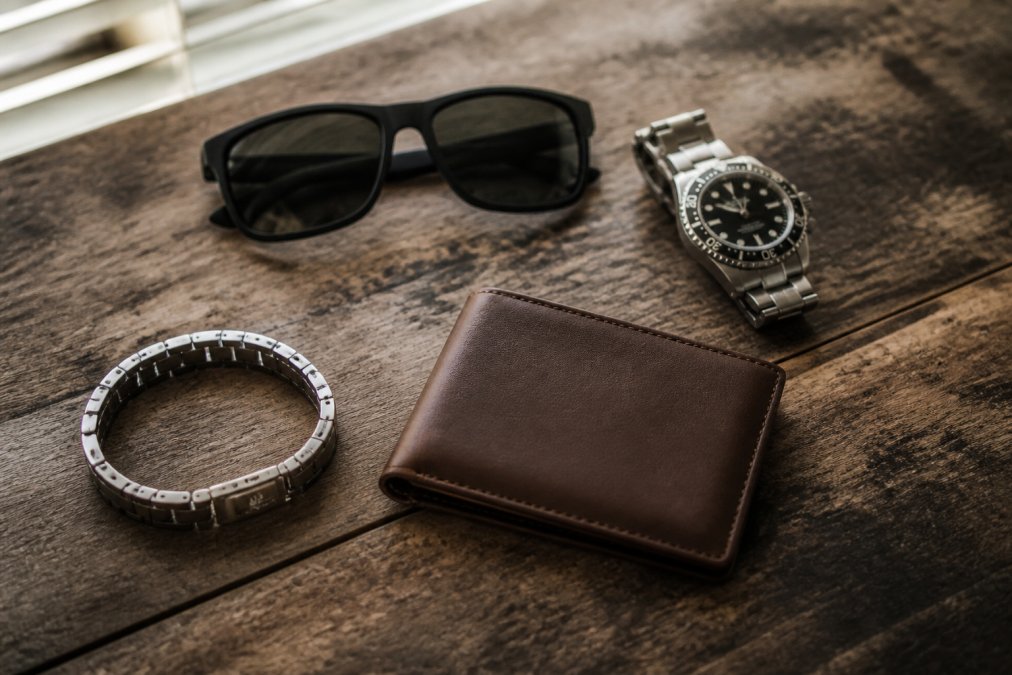
- Foundation: wallet, belt, watch, and one pair of glasses or sunglasses
- Utility: bag or backpack, keyring, and a multi-function tool
- Statement: one bracelet or ring that survives the same abuse as the rest
The five categories below cover roughly 90% of what most men carry daily.
How to Choose High-Quality Men's Accessories That Last
Choosing high-quality men's accessories comes down to three checks: material grade, construction method, and repairability. Skip any one and you're buying a replacement, not an investment.
Run this checklist before you buy anything:
- Material is named specifically. "Genuine leather" beats "premium leather." "Titanium steel" beats "metal alloy."
- Hardware is solid, not plated. Plated hardware flakes within months of daily contact.
- Stitching is tight and even. Loose or wavy stitching is the first thing to fail on leather goods.
- Weight feels right for the size. A titanium steel bracelet at 0.12 kg and 180 mm, like the Retro Titanium Steel Men's Bracelet with Skull Design, signals real metal rather than hollow tubing.
- Replacement parts exist. Buckles, straps, and clasps should be sourceable.
A 30-day wear test of watches, wallets, and belts found that some high-priced accessories fail to outperform cheaper options in daily wear scenarios, per FindBetter.site's accessory durability testing. Price is a signal, not a guarantee.

Best Durable Materials for Men's Accessories
Titanium steel, full-grain leather, and tungsten carbide consistently hold up to daily wear. Each wins in a different category, so match the material to the item rather than chasing one "best" answer.

Titanium steel resists corrosion, keeps its finish, and handles sweat and rain without pitting. It's the strongest choice for rings and bracelets, which take constant contact with desks, doors, and gym equipment. The Creative Titanium Steel Zircon Fashion Ring uses this material because it withstands daily knocks while keeping its shine.
Full-grain leather develops a patina instead of cracking, provided it's conditioned twice a year. Cowhide remains the preferred material for daily carry items like keyrings and keychains specifically because it withstands consistent use, based on Amazon's 2026 best sellers data for men's accessories.
Retro Titanium Steel Men's Bracelet →
Tungsten carbide is increasingly favored for matte-finish rings because of its hardness for everyday wear, according to Thorum's 2026 men's accessory trend report.
| Material | Best For | Watch Out For | Maintenance |
|---|---|---|---|
| Titanium steel | Rings, bracelets | Heavier than aluminum | Wipe with soft cloth |
| Full-grain leather | Wallets, belts, boots | Needs conditioning | Twice-yearly balm |
| Tungsten carbide | Matte rings | Brittle under impact | None required |
| Oxford cloth | Bags, backpacks | Less formal look | Spot clean only |
| TR90 frames | Eyewear | Flexes, doesn't stiffen | Rinse, air dry |
Durability Testing: How Durable Daily Accessories for Men Hold Up
Durability testing for daily accessories means putting each piece through the conditions it will actually face: sweat, abrasion, weight, and repeated flexing. Lab results matter less than a 30-day real-wear trial, but the trial only tells you something if you know what to look for.
- Wear it for 30 consecutive days. No rotation, no exceptions. This exposes finish wear and comfort problems fast.
- Check hardware weekly. Look for plating wear on clasps, buckles, and zipper pulls, specifically at the contact points, not the flat surfaces.
- Load the bag to capacity. A backpack rated for 20-35L should carry that weight without seam strain. Check the bar-tack (the dense zigzag stitch) at strap anchors; that's where bags fail first.
- Expose it to weather. Rain and sun reveal whether a finish or coating actually holds. UV degrades nylon webbing and rubberized coatings faster than leather.
- Inspect stitching after week four. Count SPI at the highest-stress seam and look for thread fraying, which precedes seam failure.
Repairability and Longevity: Making Durable Daily Accessories for Men Last
Repairability determines whether a piece lasts three years or ten. The most durable daily accessories for men have replaceable straps, sourceable buckles, and resoleable soles, not the hardest materials.
Maintenance that actually pays off:
- Leather: condition twice a year with a neutral balm. Skip colored polishes, which clog grain.
- Titanium steel: wipe with a soft cloth after contact with sweat or saltwater. No polish needed.
- Canvas and Oxford cloth: spot clean and air dry. Never machine dry, which shrinks coatings.
- Eyewear: rinse TR90 frames like the Guadalajara Retro Square TR90 Blue Light Glasses under lukewarm water, then air dry. Wiping dry grinds dust into the lens coating.
Age-Appropriate Styling and Sustainability in Men's Accessories
Age-appropriate styling and sustainability pull in the same direction: both favor fewer, better pieces that stay in rotation for years. Here's what that looks like across life stages, and how to read a sustainability claim without getting greenwashed.

Styling by life stage, not by age number.
- Early career / creative roles: one statement piece is enough. A skull-design bracelet or a zircon ring carries a full outfit; keep the rest quiet, a plain leather belt, a slim wallet, a simple watch.
- Corporate / client-facing: prioritize finish quality over novelty. Matte finishes (brushed steel, matte tungsten, vegetable-tanned leather) hide micro-scratches instead of amplifying them. A high-polish ring shows every desk knock; a brushed one looks the same in year three as year one.
- Outdoor / trade work: durability beats formality. Titanium steel over tungsten carbide (impact resistance over scratch resistance), full-grain leather over corrected-grain, and a bag with bar-tacked strap anchors over glued seams. Don't force one piece to work on weekends and in the office.
- Any age: match formality to context. The failure mode isn't wearing the wrong piece; it's wearing a piece trying to be two things at once.
- Vegetable-tanned leather over chrome-tanned. Vegetable tanning uses tree bark extracts and takes weeks; chrome tanning uses chromium salts and takes a day. Vegetable-tanned leather can be re-oiled and repaired for decades; chrome-tanned leather dries out and cracks, ending up in a landfill. The trade-off: vegetable-tanned is stiffer, pricier, and patinas unevenly at first.
- Repairable construction over sealed construction. A bag with stitched-and-screwed hardware can be re-strapped; one with glued-and-riveted hardware cannot. A boot with a Goodyear-welted or stitched sole can be resoled; a cemented sole cannot. Repairability is the most honest sustainability metric because it's verifiable at the point of sale.
- Recycled metals over virgin where performance allows. Recycled stainless and recycled titanium perform identically to virgin metal for accessories, no durability trade-off, so the only question is whether the brand can document the supply chain. If it can't, the claim is marketing.
Frequently Asked Questions
What are the most essential everyday carry items for men?
The core EDC kit includes a watch, a slim wallet, a belt, and a bag or backpack for daily transport. Add jewelry like a titanium steel bracelet or ring for personal style. Dead Heat's anti-theft backpack (20-35L) and waterproof business backpack (36-55L) cover the carry category, while the Retro Titanium Steel Men's Bracelet and Creative Zircon Ring handle the jewelry slot. Choose pieces that match your daily routine and rotate them to reduce wear.
How do you choose durable accessories that last?
Look for materials that resist scratching and corrosion, like titanium steel, genuine leather, and tungsten carbide. Check construction details: reinforced stitching, solid hardware, and replaceable parts. Premium pricing does not always guarantee better durability, so evaluate the specific build rather than the price tag. Prioritize pieces with repairable designs and timeless styling that won't feel dated in a year.
What are the best durable materials for men's accessories?
Titanium steel and tungsten carbide lead for jewelry because they resist scratches and tarnish. Head layer cowhide and crazy horse leather work well for boots and wallets, developing a patina over time. Oxford cloth and waterproof canvas handle bags and backpacks. Stainless steel remains a solid choice for watch cases and hardware. Tungsten carbide is increasingly favored for matte-finish rings, and durable cowhide stays a top pick for daily carry items like keychains.
Why should men invest in high-quality daily accessories?
An investment-piece mentality that values durability and longevity drives the fashion accessories market. High-quality pieces reduce replacement costs, look better with age, and often carry better warranties or repair options. A durable titanium steel bracelet or a well-made leather belt can last years, while cheap alternatives may fail within months. The upfront cost is usually offset by fewer replacements and better daily performance.